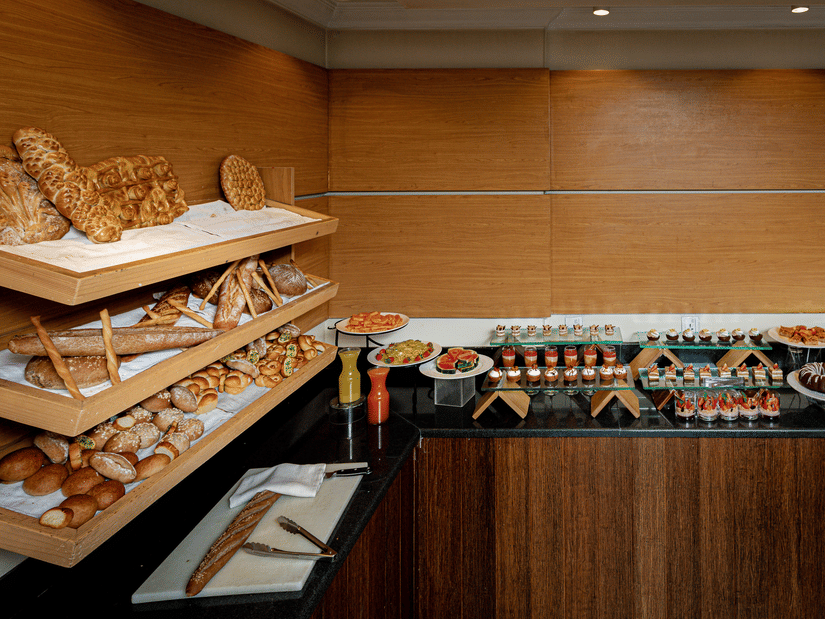
Berbere: It is a complex, fiery mix of chilli powder, ginger, garlic, fenugreek, and korarima (Ethiopian cardamom). It forms the backbone of most slow-cooked meat stews.
Mitmita: It is a finer, hotter powder made from bird's eye chillies, cardamom, and cloves, often salty and used as a finishing spice.
Niter Kibbeh: It is a spiced clarified butter infused with garlic and ginger, used as the primary cooking fat.
Central to every meal is injera, a large fermented flatbread made from teff, a grain native to the Ethiopian highlands. Teff is gluten-free and high in iron. By serving as the plate, the foundation for the meal, and the means of transport for each morsel, injera creates a unique dining experience that elegantly bypasses the need for traditional cutlery. Unlike most cuisines, where individual plating is the norm, the Ethiopian traditional food is served on a single large platter shared by everyone at the table, making every meal a profound expression of community and belonging.
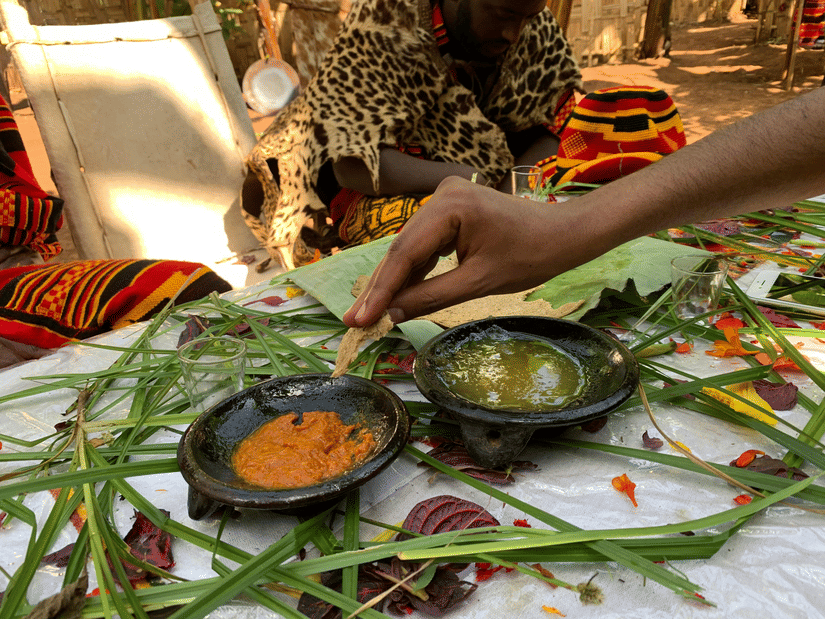
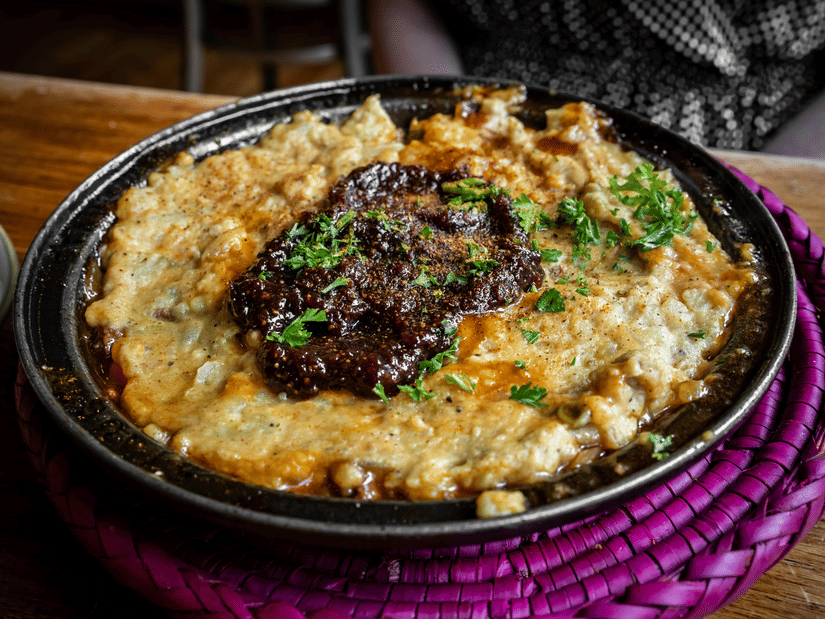
Ethiopian cuisine spans fiery meat-based stews and richly spiced vegetarian platters, the latter rooted in Ethiopia's Orthodox Christian fasting tradition (known as tsom), during which meat and dairy are avoided for up to 200 days a year.
Doro Wat
Widely considered the national dish of Ethiopia, doro wat is a deeply spiced chicken stew slow-cooked in berbere and niter kibbeh, with whole hard-boiled eggs added near the end of cooking. It is traditionally served at celebrations such as Easter and weddings, always on injera.
Tibs
Tibs is sauteed or pan-fried beef or lamb cooked with garlic and rosemary. It is a popular everyday dish and can be served mild (lega) or spicy (key) inside a hot ceramic pot.
Kitfo
Kitfo is minced raw or lightly warmed beef seasoned with mitmita and niter kibbeh. It is considered a delicacy, particularly among the Gurage people of central Ethiopia, and is typically served with ayib (fresh white cheese) and gomen (cooked collard greens).
Shiro and Vegetarian Platters (Beyaynetu)
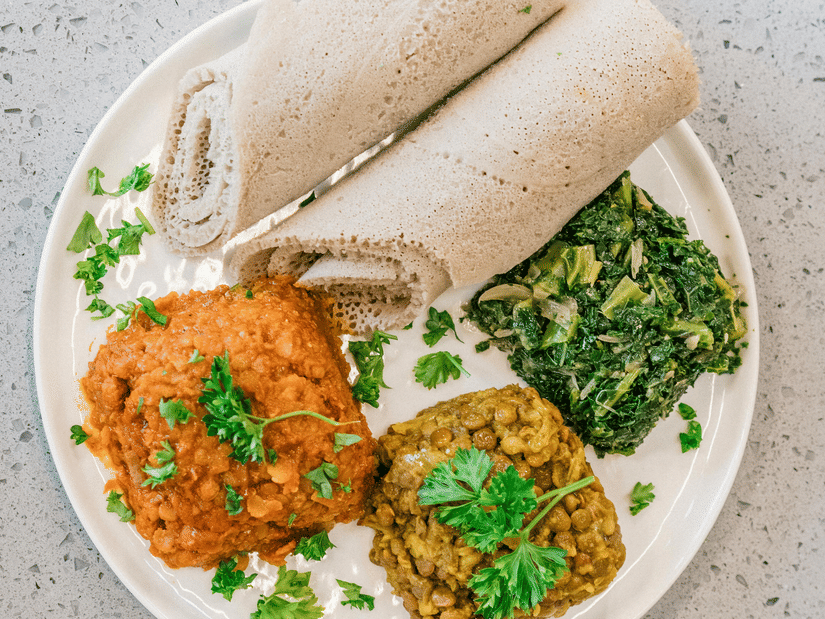
Shiro is a smooth stew made from ground chickpeas or broad beans with berbere and onion. A full beyaynetu fasting platter goes further, typically including misir wat (spiced red lentils), gomen (collard greens), atakilt wat (cabbage and potato with turmeric), fossolia (tender green beans and carrots), and ayib (local cheese). If you think plant-based eating is boring, this spread will change your mind—it highlights the incredible flavours and variety of Ethiopian traditional food.
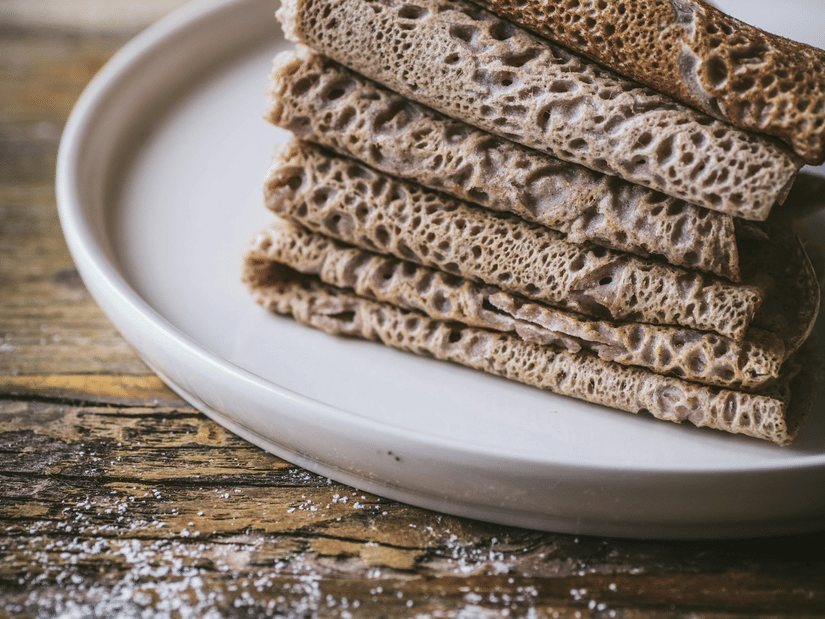
Injera
In the world of Ethiopian cuisine, the injera at the bottom is the best part; it sits under the stews and slowly soaks up every delicious flavour on the platter. The injera beneath the stews slowly absorbs the flavours of every dish placed on top, making it an integral part of the meal rather than just a base.
Gursha
One of the most distinctive customs is gursha, the act of hand-feeding someone from your own portion. It is a gesture of deep respect and affection, and the bigger the bite offered, the greater the honour. This tradition has no real parallel in other food cultures and speaks to how central communal eating is to Ethiopian identity. Traditionally, meals are eaten with the right hand only.
Ethiopian Coffee Culture and Traditional Beverages
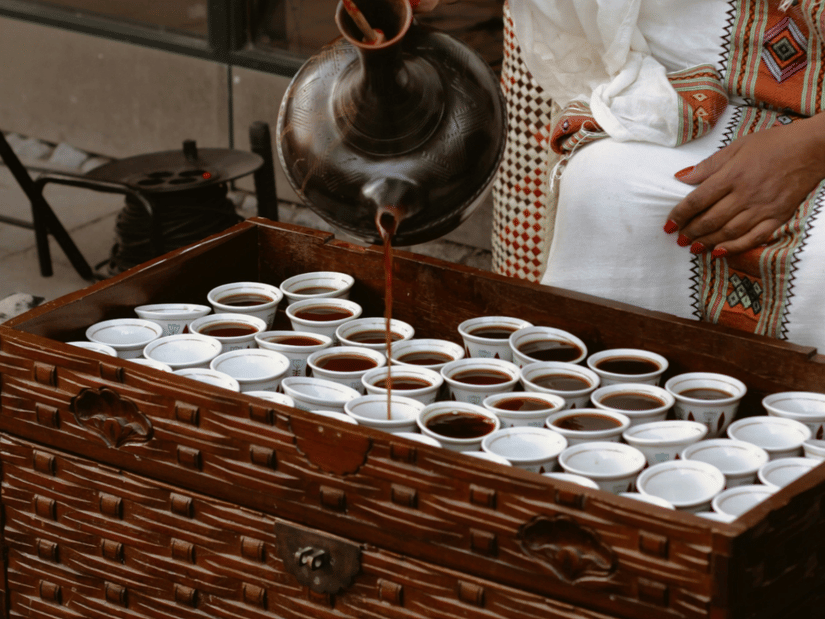
Ethiopia is widely recognised as the birthplace of coffee. Today, the region yields some of the globe's most esteemed single-origin coffees—such as Yirgacheffe, Sidamo, and Harrar—each boasting a remarkably unique flavour profile. The coffee ceremony (buna) is the most important social ritual in Ethiopian culture. Beans are roasted on an open flame in front of guests, ground by hand, and brewed in a clay pot called a jebena. Coffee is served in three rounds:
Abol: The first and strongest cup
Tona: The second, slightly lighter cup
Baraka: The third cup, considered a blessing
Beyond coffee, tej (fermented honey wine flavoured with gesho herb) is a celebrated traditional beverage, served in flask-shaped vessels called berele. Tella, a home-brewed sorghum or barley beer, is also widely consumed across Ethiopia.
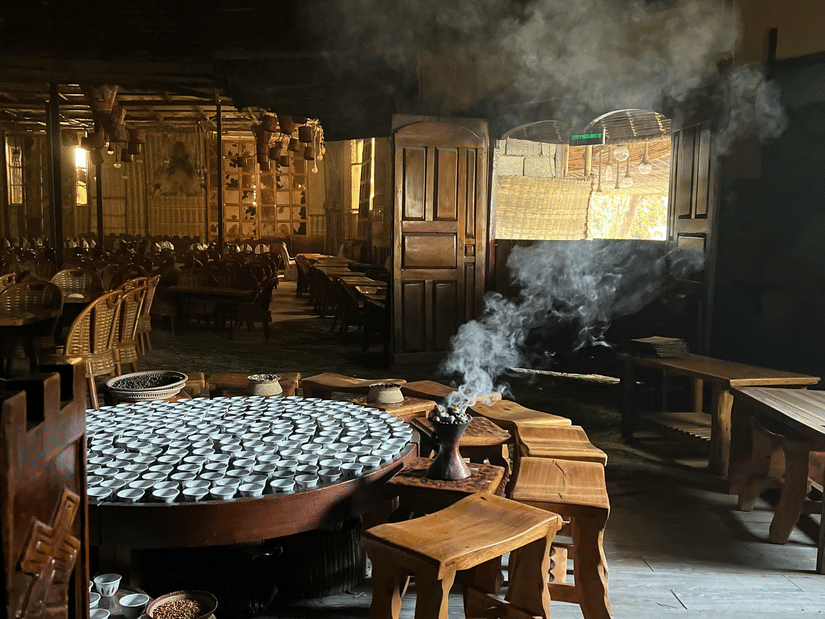
Where to Experience Authentic Ethiopian Cuisine in Addis Ababa
Addis Ababa is the ideal city to explore Ethiopian traditional food, from neighbourhood tej houses to upscale cultural restaurants. Key dining types to seek out include:
Tej Bets: Traditional honey wine houses that serve simple stew-based foods alongside tej
Cultural Restaurants: Establishments pairing live traditional music with communal food platters
Fasting Restaurants: Specialising in vegetarian beyaynetu platters, particularly lively on Wednesdays and Fridays
Tibs Houses: Butcher-style restaurants where guests select their cut, and it is cooked to order
Addis Ababa is a city where Ethiopian cuisine tells centuries of history on every plate, and Ramada by Wyndham Addis, our 4-star hotel on Africa Avenue in the Bole district, places you close to both the city’s flavours and Bole International Airport.
At The Chef's Club, our all-day dining restaurant, you can tuck into traditional dishes such as kitfo, gomen, and doro wat every Thursday, watching them being prepared fresh at open cooking stations. When you want to venture beyond Ethiopian food, our five other dining outlets take you further: up to the rooftop at Fogo no Chão for Brazilian Churrascaria with live music and city views, across to Junoon for Indian tandoor and curries, into the refined Palace Court for a special occasion dinner, or simply down to Konnect Lobby Lounge for a cocktail and a light bite.
Retreat to one of our 134 well-appointed accommodations, each fitted with complimentary Wi-Fi, a flat-screen TV, a minibar, an in-room safe, and a tea and coffee maker. After a day of exploring the Ethiopian delicacies, melt away at our wellness spa, push through a session at our fitness centre, or simply order in and let 24-hour room service take care of the rest.