The First Stage of the Ethiopian Coffee Ceremony
The Ethiopian coffee ceremony is a deeply rooted cultural ritual, and the first half of the ceremony focuses on preparation, hospitality, and shared anticipation. Traditionally, the matriarch or woman of the household leads the ceremony, playing a central and respected role throughout the process.
The ceremony begins with the careful cleaning of raw green coffee beans (buna), traditionally washed to remove any impurities. The beans are then slowly roasted over a flat pan, a process that demands constant attention to ensure even roasting. As the beans crackle and release their deep, aromatic fragrance, guests are offered light snacks, staying engaged while the coffee’s flavour and aroma fully develop.
Once the beans are perfectly roasted, they are passed around for guests to smell, allowing everyone to experience the aroma as a sign of welcome and connection. The roasted beans are then ground using a traditional mortar and pestle, preserving the authenticity of the ritual. Finally, the freshly ground coffee is brewed with hot water in a clay pot known as a Jebena, marking the transition into the next phase of the ceremony.


The Second Stage of the Ethiopian Coffee Ceremony
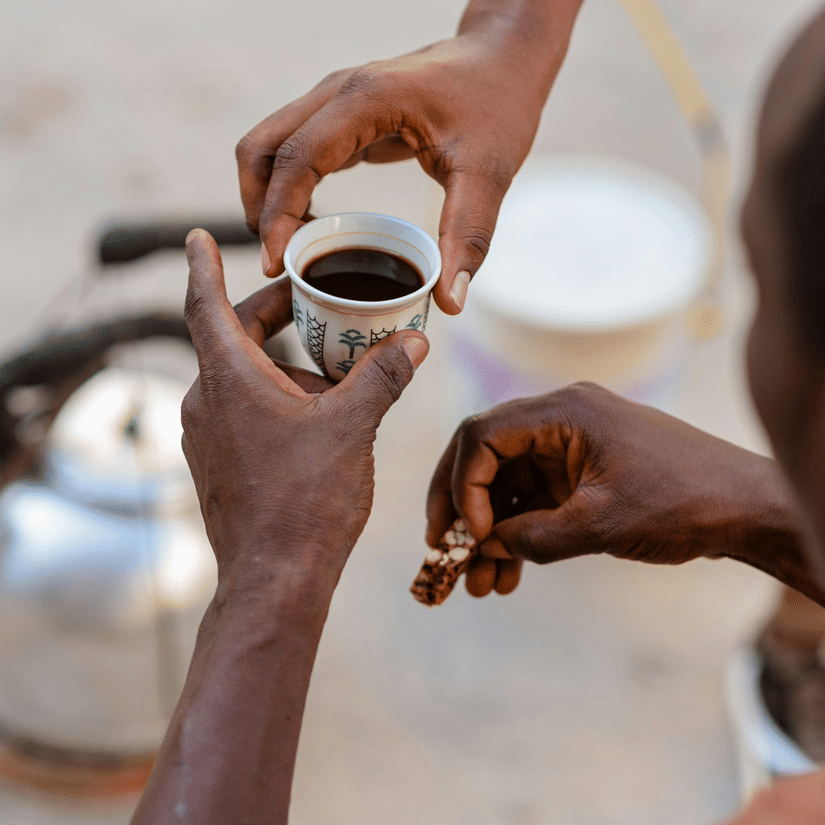
In the second stage of the Ethiopian coffee ceremony, the Jebena, now filled with coffee and water, is placed back on charcoal and additional hot water is added. Once brewed, the coffee is carefully filtered to separate the liquid from the grounds, preparing it for serving. The coffee is then poured and shared in three ceremonial rounds, each carrying its own meaning and purpose.
These three rounds are known as Abol, Tona, and Baraka. Abol, the first round, is the strongest and most robust brew, marking the formal beginning of the ceremony. The second round, Tona, is slightly milder and symbolises the strengthening of bonds and conversation among guests. The final round, Baraka, often called the blessing cup, is the lightest and represents goodwill, gratitude, and spiritual blessing. Sugar is usually offered before the first round, depending on personal preference.
Serving the coffee is considered an honour and is typically done by either the youngest or the eldest family member, depending on family tradition. This act of serving reinforces respect, togetherness, and the communal spirit that defines the Ethiopian coffee ceremony.
These three rounds are known as Abol, Tona, and Baraka. Abol, the first round, is the strongest and most robust brew, marking the formal beginning of the ceremony. The second round, Tona, is slightly milder and symbolises the strengthening of bonds and conversation among guests. The final round, Baraka, often called the blessing cup, is the lightest and represents goodwill, gratitude, and spiritual blessing. Sugar is usually offered before the first round, depending on personal preference.
Serving the coffee is considered an honour and is typically done by either the youngest or the eldest family member, depending on family tradition. This act of serving reinforces respect, togetherness, and the communal spirit that defines the Ethiopian coffee ceremony.
The Story Behind Abol, Tona, and Baraka
According to popular legend, the three rounds of the Ethiopian coffee ceremony—Abol, Tona, and Baraka—are linked to the ancient story of coffee’s discovery.
The tale speaks of a goat herder who noticed his goats behaving unusually energetic after eating red coffee berries. The goats are often symbolically referred to as Abol, Tona, and Baraka, names later associated with the three ceremonial servings of coffee.
Intrigued by their heightened energy, the herder shared his observation, which eventually led to the brewing of the beans and the recognition of coffee’s stimulating properties. Over time, this story became woven into Ethiopian coffee culture, with the three rounds of coffee symbolising strength, connection, and blessing—values that remain central to the ceremony today.


A Multi-sensory Cultural Experience
What makes the Ethiopian coffee ceremony truly unique is its sensory richness. Fresh grass is often spread across the floor to represent renewal and prosperity, while incense burns to cleanse the space and enhance the atmosphere.
The rhythmic sounds of roasting, grinding, and pouring coffee create a calming cadence, encouraging conversation and connection. Guests are typically served the coffee with popcorn or traditional snacks, reinforcing the idea that the ceremony is meant to be shared.
Why is the Ceremony Performed
The buna (coffee) ceremony is deeply woven into everyday Ethiopian life, serving as a powerful social anchor. More than just coffee, it is a time to exchange news, strengthen relationships, and show respect within the community.
This deep cultural role has also led to it being referred to as the Habesha coffee ceremony, with Habesha translating to the people of Ethiopia. For visitors, taking part in the ceremony is considered an honour rather than a performance, reflecting the warmth, authenticity, and generosity of true Ethiopian hospitality.
Tips for Visitors Experiencing the Buna Ceremony
Experiencing the buna ceremony is a meaningful cultural moment. Approaching the ceremony with patience, openness, and respect helps honour the tradition and the host’s hospitality.
- Accept at least one cup of coffee, as this is customary and seen as a sign of respect.
- Take time to sit through the ceremony, which is intentionally slow and communal.
- Engage in conversation and ask questions, as curiosity is often welcomed.
- Ask permission before taking photographs, even when photography is generally allowed.
- Observe the atmosphere of quiet respect, allowing the ceremony to unfold naturally.
Best Time to Experience the Buna Ceremony
The Ethiopian coffee ceremony is held regularly as part of daily life, making it easy for visitors to experience.
Traditionally, the ceremony is performed three times a day—in the morning, around midday or early afternoon, and again in the evening—offering multiple opportunities to take part during your stay.
For travellers planning a culturally focused visit, the best months to visit Ethiopia are from October to March. During this period, mild weather and clearer skies make it more comfortable to explore neighbourhoods, attend ceremonies, and engage in local traditions.
To ensure an authentic and respectful experience, it’s best to arrange participation through trusted local hosts or knowledgeable guides, rather than opting for hurried or staged tourist demonstrations. This approach allows the ceremony to unfold naturally, preserving its cultural meaning and rhythm.
Experience Ethiopian Culture with Ramada by Wyndham Addis
For travellers visiting Ethiopia to experience traditions like the Ethiopian coffee ceremony, staying at the right place makes all the difference.
Ramada by Wyndham Addis offers a comfortable and well-located base in the heart of the city, ideal for guests who want to immerse themselves in local culture while enjoying modern conveniences.
Our hotel features well-appointed rooms and suites designed for a relaxing stay, complete with free Wi-Fi, air-conditioning, flat-screen TVs, in-room safes, and tea and coffee-making facilities. After a day of cultural exploration, guests can return to a space that feels calm, familiar, and thoughtfully equipped.


Thoughtful Facilities for a Comfortable Stay
Ramada by Wyndham Addis enhances your visit with a range of facilities designed to balance convenience, comfort, and flexibility.
Guests Can Enjoy:
- A fully equipped fitness centre for maintaining wellness routines
- Airport transfers for smooth arrivals and departures
- A business centre for travellers combining work and leisure
On-site multi-cuisine restaurants and lounges offer relaxed dining options, making it easy to unwind after exploring Addis Ababa’s cultural neighbourhoods or participating in experiences like the buna ceremony.
With a central location and modern hospitality, our hotel provides easy access to the city’s vibrant attractions while ensuring a comfortable, seamless stay.